About Helping to Leave
Since February 24, 2022, Helping to Leave has been assisting Ukrainians who find themselves in danger due to russia's military aggression.
Since then
21 655
people were evacuated from the temporarily occupied territories of Ukraine, as well as from russia and belarus, where Ukrainians had been deported
28 385
people were evacuated from the de-occupied and frontline territories
21 650
people were assisted at various humanitarian corridors
2 170
people were assisted with adaptation
What we do
We are inspired by the resilience of displaced Ukrainians and work to help them build a better future.
To this end, we implement comprehensive assistance programs for people affected by the war. We are by their side every step of the way — from evacuation out of unsafe areas to systematic adaptation in a new place and making it possible for them to live in safe and comfortable conditions.
We work with respect for the needs of each and every person. Particular attention is given to older adults, people with disabilities and serious illnesses, as well as families with children and young people.
We:
- plan the safest evacuation route out of the frontline and temporarily occupied territories, as well as from russia and belarus
- provide consultations on evacuation preparation
- organize evacuation logistics and cover related expenses: pay for evacuation transport fuel, purchase transportation tickets, and provide travel assistance for the most vulnerable beneficiaries
- provide free transportation tickets for further travel within Ukraine
- assist displaced people from the temporarily occupied territories at the humanitarian corridor
- assist with adaptation after evacuation: find temporary housing, provide guidance on document restoration and accessing public services, register for cash assistance, etc.
- organize social transportation to hospitals, government agencies, and other essential services (currently, we provide this assistance only to residents of the Kherson Oblast)
- advocate for the rights of displaced people to bring about systemic change
Stories of those we've helped
Our values
In our work, it is not only "what" we do that matters, but also "how" we do it. We act in accordance with the values that we consider fundamental.
The informational, physical, and psychological safety of our beneficiaries, partners, donors, and team members is our top priority.
We consider human life to be the most precious thing, and every person affected by the russian aggression has the right to humanitarian aid, regardless of social status, life circumstances, or personal views.
In our work, we adhere to universally accepted international standards in the field of human rights protection and strive to draw attention to the human rights violations we encounter in order to influence systemic solutions to these problems.
We pay special attention to protecting vulnerable groups, which are represented among our beneficiaries and team members. We make a special effort to combat discrimination and ensure equality.
By acting with accountability, we show respect for others. We fulfill our commitments, take responsibility for our decisions, and accept the consequences of our actions, words, and decisions without shifting the blame for mistakes onto others.
Every person on our team must be competent, responsible, and proactive in their field of work, as well as able to adapt quickly to new circumstances and adhere to our project's ethical standards. These qualities are essential because they directly impact the quality of the assistance we provide.
We adhere to the principles of openness, honesty, and accessibility of information regarding the project's activities. We regularly publish financial and activity reports, undergo external audits, share updates on social media and in the media, and respond to questions.
Our development strategy, areas of activity, criteria for receiving assistance, team recruitment, and external positioning are a logical extension of the project's mission and values. We make all decisions thoughtfully and implement them step by step to achieve our goals.
We pay close attention to details, because everything great and important is made up of small things. We strive to create a universal support system, but at the same time, we understand that people are different and we don't know what they're going through, so we always tailor our response to each request for help, taking individual needs into account.
We don't stand by when asked for help. We respond to inquiries, and if we can't provide the assistance ourselves, we try to find those who can; and if that's not possible, we politely explain the situation.
We strive to understand and relate to the emotions, feelings, and experiences of others. We treat others with care, choose our words thoughtfully when communicating, and respect personal boundaries.
Only by working together can we achieve more and do better, both within our team and collaboratively with partners, authorities, and others.
We are grateful to the people who have reached out to us for help; to those who have joined our team as volunteers and staff members; to our partners, donors, and everyone we collaborate with. The trust people place in us is a source of great pride and responsibility.
How we operate
Our assistance is comprehensive.
A systematic approach to providing assistance allows us to not only tackle various issues faced by beneficiaries, but also to influence their decision-making regarding the evacuation right from the get-go. People are frightened by the prospect of heading into the unknown, so we immediately offer them a sense of support at every step of their journey toward a new life.
We accompany people from the moment we receive their request: identify their needs, provide consultations, organize evacuations, ensure they have everything they need for travel, support them throughout the entire journey, and, once they reach safety, help meet their basic needs and help them adapt to their new surroundings.
If, during this process, we identify new challenges faced by displaced people, we try to address them ourselves or with the help of our partners, and we also bring these issues to the public's attention to promote systemic change at the state level.

How we operate:
We receive requests for assistance via the Telegram bot, our hotline, and directly from our partners. Our operators assess each request and forward the beneficiary's information to the relevant specialists.
In the Kherson Oblast, we organize evacuation trips and social transportation to Odesa and Mykolaiv both independently and in collaboration with partners. Moreover, we help plan the onward journey, purchase transportation tickets, and provide accompaniment on the road.
In the Kharkiv Oblast, we organize individual evacuation trips upon request together with our partners, transport people to the transit center in Kharkiv, and help plan the onward journey, purchase transportation tickets, and provide accompaniment on the road.
We carry out evacuations from the temporarily occupied territories, russia, and belarus on a remote basis, covering all of the necessary expenses. We remain in contact with the beneficiaries throughout the entire journey — until they reach the Ukrainian-controlled territories.
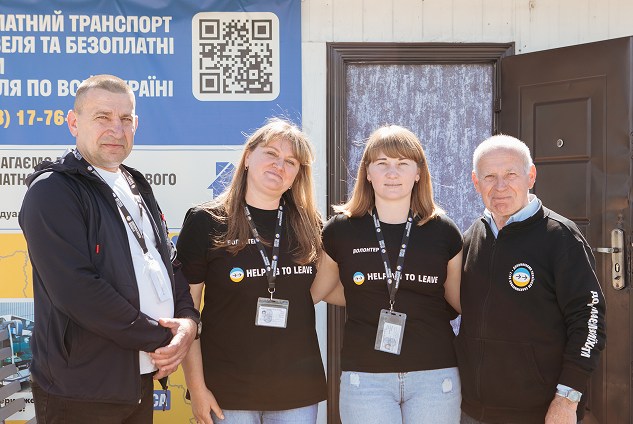
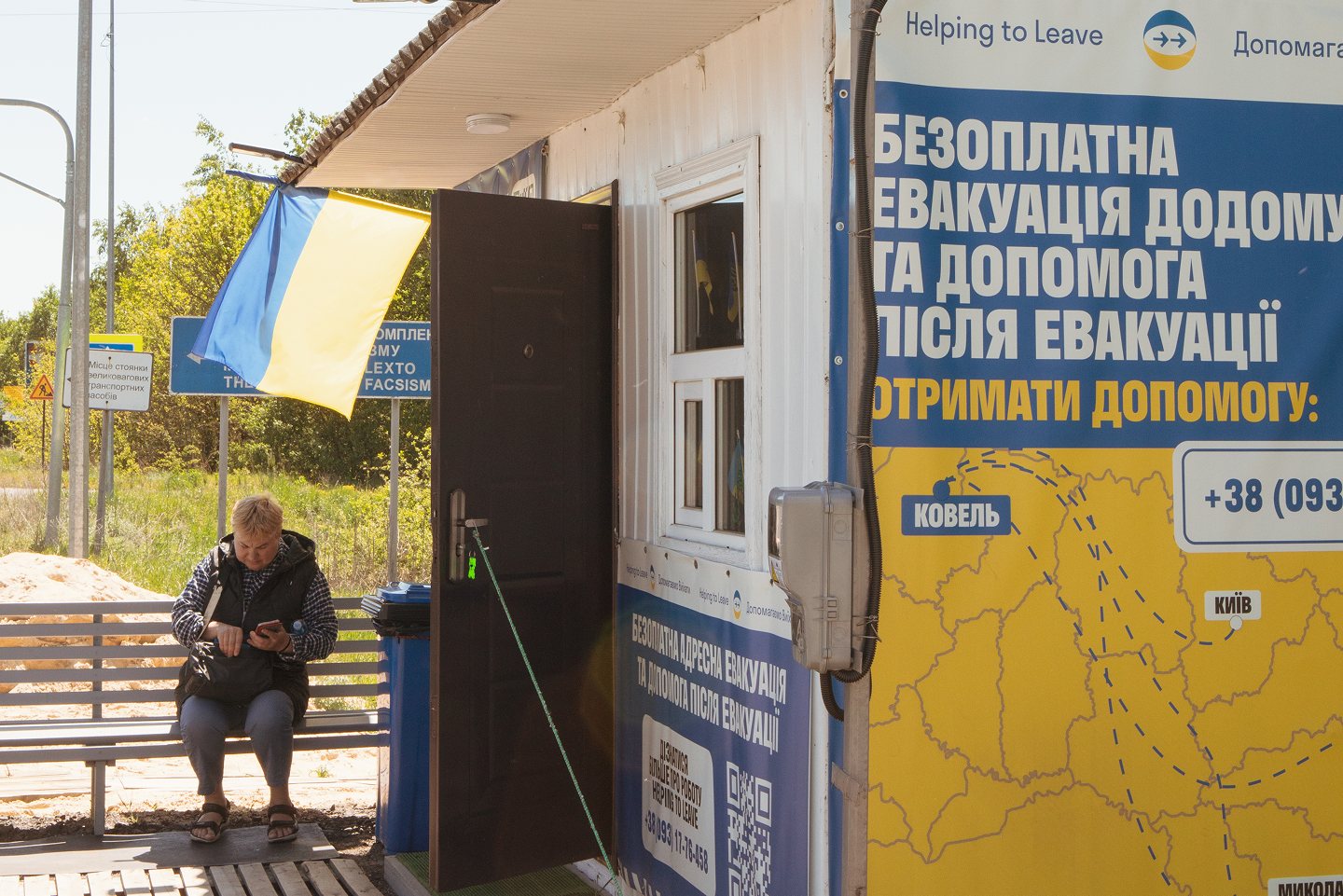
At the humanitarian corridor in the Volyn Oblast, we assist people immediately after they cross the border, transport them to Kovel, and purchase transportation tickets for further travel for certain categories of beneficiaries.
We address people's immediate needs directly upon arrival: find free temporary housing, register (specific categories of beneficiaries, if available) for cash assistance from international donors, and provide guidance on document restoration. Additionally, we give out new SIM cards (to specific categories of beneficiaries, if available) and provide hot meals in Kovel.
Three to six weeks after providing assistance, we contact beneficiaries to see if they've had any problems with adaptation after their evacuation. If assistance is needed, our adaptation team provides it themselves or refers people to trusted partners.
Based on survey results, we prepare analytical reports and share them with government agencies and international donors to influence systemic solutions to the problems faced by displaced people. We also raise public awareness of these issues through the media and our social media.
Get in touch with us for free assistance
Free evacuation from the temporarily occupied territories of Ukraine and the Ukrainian-controlled territories of the Kherson, Kharkiv, and Zaporizhzhia oblasts



Our history and achievements
2022
February
March
started evacuating Ukrainians from the temporarily occupied territories and from russia, where they had been deported
April
May
organized the first evacuation from the occupation via the Pechenihy Dam
September
began evacuating people following the de-occupation of the Kharkiv Oblast
October
November
began evacuating people following the partial de-occupation of the Kherson Oblast
December
suspended evacuations from the temporarily occupied to Ukrainian-controlled territories for several months due to the closure of the checkpoint in Vasylivka
2023
April
began assisting people from the temporarily occupied territories at the Kolotylivka — Pokrovka humanitarian corridor in the Sumy Oblast
June
provided assistance to people affected by the terrorist attack on the Kakhovka Dam
July
began assisting people from the temporarily occupied territories at the Mokrany — Domanove humanitarian corridor in the Volyn Oblast
August
2024
2025